
Mary Did You Know? PDF: A Comprehensive Overview
Exploring the digital realm reveals numerous PDF resources for “Mary, Did You Know?” – sheet music, chord charts, and arrangements abound online, catering to diverse musical needs.
Origins and Background of the Song
“Mary, Did You Know?” emerged from a Christmas program conceived by Mark Lowry in 1991. Initially, it wasn’t intended as a standalone song, but rather a reflective piece within a larger theatrical production. Lowry, deeply moved by contemplating Mary’s perspective, began crafting lyrics that posed profound questions about her understanding of her son’s destiny.
The song’s genesis wasn’t immediate; it evolved over several years as Lowry wrestled with expressing the weight of the Incarnation from Mary’s viewpoint. He aimed to capture the awe and wonder, alongside the foreshadowed suffering, inherent in her role. The initial verses were presented to Buddy Greene, who then composed the compelling melody that would ultimately elevate the song to enduring popularity.

The song’s power lies in its ability to blend theological depth with emotional resonance, prompting listeners to consider the magnitude of God’s plan through the eyes of a young mother.
The Composer and Lyricist: Mark Lowry
Mark Lowry, a renowned Christian singer, comedian, and author, is the creative force behind the poignant lyrics of “Mary, Did You Know?”. His background as a gospel music performer and storyteller profoundly influenced his songwriting style, characterized by emotional depth and relatable narratives. Lowry’s initial inspiration stemmed from a desire to explore the often-overlooked perspective of Mary, the mother of Jesus.
He wasn’t a formally trained musician, but his innate musicality and poetic sensibility allowed him to craft lyrics that resonate deeply with audiences. Lowry’s work often centers on themes of faith, grace, and the human experience.
His ability to connect with listeners on an emotional level is a hallmark of his artistry, and “Mary, Did You Know?” stands as a testament to his gift for storytelling through song.
Buddy Greene’s Musical Contribution
Buddy Greene, a highly respected Christian music composer and pianist, provided the beautiful and memorable melody for “Mary, Did You Know?”. While Mark Lowry penned the lyrics, Greene’s musical arrangement brought the song to life, enhancing its emotional impact and lyrical depth. Greene’s expertise in gospel and contemporary Christian music was crucial in shaping the song’s overall sound.
He skillfully crafted a melody that complements Lowry’s thoughtful lyrics, creating a harmonious blend of words and music. Greene’s musical style is known for its accessibility and heartfelt expression, qualities that are prominently featured in this beloved Christmas carol.
His contribution is integral to the song’s enduring popularity and widespread appeal.
The Inspiration Behind the Lyrics
Mark Lowry, the lyricist, conceived “Mary, Did You Know?” while contemplating Mary’s perspective during and after the birth of Jesus. He pondered what it must have been like for her to realize the profound significance of her son’s identity – not just as a baby, but as the Messiah, the Son of God.
Lowry imagined a series of rhetorical questions directed to Mary, exploring the depth of her understanding and the weight of her role in salvation history. The lyrics aren’t meant to suggest Mary lacked faith, but rather to express the immensity of the revelation surrounding Jesus’s birth and destiny.
This thoughtful reflection formed the core of the song’s emotional resonance.

Analyzing the Lyrics and Theological Themes
The song delves into profound theological concepts, questioning Mary’s comprehension of Jesus’s divine nature and foreshadowing his sacrificial destiny.
The Question of Mary’s Awareness
The central premise of “Mary, Did You Know?” revolves around a series of rhetorical questions, prompting contemplation about Mary’s understanding of her son’s future. Did she foresee the magnitude of his divine purpose, his incarnation as the Savior, and the weight of the world’s sins he would bear?
The lyrics aren’t asserting Mary lacked faith or spiritual insight. Instead, they poetically explore the immense mystery surrounding the incarnation. It’s a human attempt to grasp the unfathomable – how could a mother fully comprehend the destiny of the Messiah?
The song invites listeners to reflect on the limitations of human understanding when confronted with divine revelation, and to marvel at the profound humility and faith demonstrated by Mary in accepting God’s plan.
The Incarnation and Divine Mystery
“Mary, Did You Know?” powerfully portrays the profound mystery of the Incarnation – God becoming flesh in the person of Jesus Christ. This central tenet of Christian faith is presented not as a logical conclusion, but as a breathtaking revelation beyond complete human comprehension.
The song’s lyrical questions highlight the paradoxical nature of this event: a divine being contained within a human mother, a king born in humble circumstances. It acknowledges the inherent limitations of our ability to fully grasp such a transcendent truth.
The PDF sheet music often serves as a conduit for worshipers to connect with this mystery, prompting deeper reflection on the immensity of God’s love and the sacrifice made for humanity’s salvation.
The Prophetic Fulfillment in Mary’s Son
“Mary, Did You Know?” intricately weaves together Old Testament prophecies and their stunning fulfillment in Jesus Christ. The lyrics subtly allude to messianic expectations, questioning if Mary understood the weight of her son’s destiny as foretold by the prophets.
The song references Jesus as the “Prince of Peace” and the “King of all Creation,” titles deeply rooted in biblical prophecy. These aren’t merely descriptive terms, but declarations of a divine plan unfolding throughout history.
PDF versions of the sheet music often inspire further study of these prophecies, encouraging believers to explore the rich tapestry of scripture and recognize God’s faithfulness in fulfilling His promises through Mary’s son.
The Suffering and Sacrifice Foreshadowed
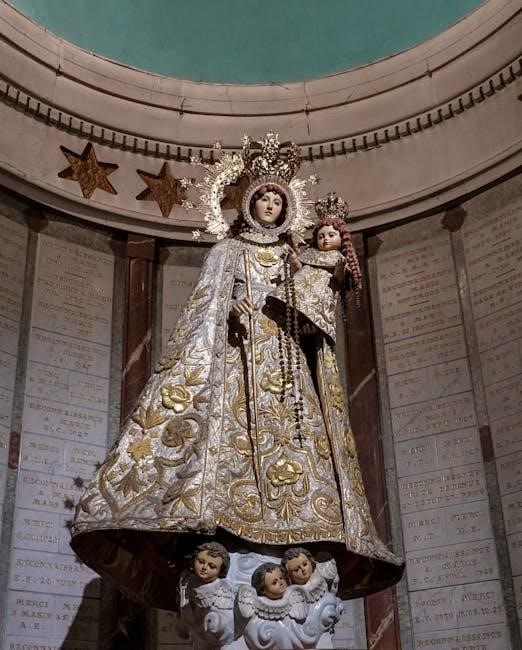
“Mary, Did You Know?” delicately hints at the immense suffering and ultimate sacrifice Jesus would endure. While celebrating His birth, the lyrics subtly foreshadow the pain of the cross and the weight of the world He would carry.
The question posed isn’t about Mary’s ignorance, but about the human inability to fully comprehend such profound sorrow. The song acknowledges the paradox of a King born to die, a Savior destined for suffering.
PDF sheet music and accompanying analyses often highlight this thematic tension, prompting reflection on the cost of redemption. The song’s emotional depth resonates deeply, reminding listeners of the profound love demonstrated through Jesus’ sacrifice.

The “Mary Did You Know?” PDF: Availability and Content
Numerous websites offer “Mary, Did You Know?” PDFs, including official sheet music and user-created arrangements – chords, lyrics, and instrumental parts are readily accessible.
Where to Find Official PDF Sheet Music
Locating authentic “Mary, Did You Know?” sheet music in PDF format often leads to reputable music publishing websites. Musicnotes.com and Sheet Music Plus are prime examples, offering officially licensed arrangements for various vocal ranges and instrumentation. These sources typically require a purchase to download the PDF, ensuring quality and legal compliance.
Additionally, the websites of artists who have prominently performed the song, like Mark Lowry or Buddy Greene, may occasionally offer official sheet music PDFs directly. Church music publishers, such as Hope Publishing or Lorenz Corporation, also frequently carry arrangements suitable for congregational worship, available for purchase as downloadable PDFs. Always verify the legitimacy of the source to avoid copyright infringement and ensure accurate musical notation.
Beware of unofficial sources claiming to offer free official PDFs, as these may be low-quality scans or illegal copies.
Free PDF Versions: Legality and Quality
The internet hosts numerous websites offering “Mary, Did You Know?” sheet music as free PDF downloads. However, exercising caution is crucial. Downloading copyrighted material without permission is illegal and unethical, potentially exposing users to legal repercussions. Many free PDFs are unauthorized scans, often of poor quality, containing errors in notation or incomplete arrangements.
Furthermore, these unofficial sources may harbor malware or viruses, compromising your device’s security. While some websites claim “public domain” status, this is rarely applicable to contemporary Christian music like “Mary, Did You Know?”.
Consider supporting the composers and publishers by purchasing legitimate PDF versions. If a free resource is encountered, thoroughly vet the source and be aware of the potential risks associated with unauthorized downloads.
Different Arrangements Available in PDF Format
A diverse range of “Mary, Did You Know?” arrangements are readily available in PDF format, catering to various skill levels and ensemble types. Simple piano arrangements are common, ideal for beginners, while more complex versions include intricate harmonies and embellishments for advanced pianists.
Vocal arrangements exist for soloists, duets, choirs (SATB, SSA, TTBB), and even vocal ensembles. Instrumental arrangements extend to guitar, strings, brass, and woodwinds, offering flexibility for different instrumentation.
PDF resources often feature simplified arrangements for younger musicians or church worship teams. Orchestral scores and accompaniment tracks are also available, providing a full and immersive musical experience. Exploring different arrangements allows musicians to personalize their performance and adapt the song to their specific context.
Chord Charts and Guitar Tabs in PDF
Guitarists and worship leaders frequently seek “Mary, Did You Know?” chord charts and tablature in PDF format. These resources simplify learning and performing the song, providing clear visual guides to chords, strumming patterns, and fingerpicking arrangements.
PDF chord charts typically display lyrics alongside chord symbols, enabling quick and easy accompaniment. Guitar tabs offer a more detailed representation of the melody and harmonies, showing finger placement on the fretboard.
Various websites and online communities offer free and paid PDF chord charts and tabs, ranging in accuracy and complexity. Some versions include simplified chords for beginners, while others feature advanced voicings and embellishments for experienced players. Finding a reliable and well-formatted PDF is crucial for a smooth and enjoyable playing experience.

Impact and Popularity of the Song
“Mary, Did You Know?” has become a beloved Christmas staple, frequently performed in churches and concerts, resonating deeply with audiences worldwide.
Christmas Music Staple
The song’s profound lyrical content and emotive melody have firmly established “Mary, Did You Know?” as a cornerstone of contemporary Christmas music. It consistently appears on holiday playlists and radio stations, becoming a traditional favorite for many families during the festive season.
Its popularity extends beyond casual listening, frequently featured in Christmas concerts and special church services. The song’s ability to evoke a sense of wonder and contemplation regarding the nativity story contributes to its enduring appeal. The readily available PDF sheet music further facilitates its performance by choirs and musicians, solidifying its place in Christmas traditions globally.
The emotional depth and theological themes resonate with a broad audience, making it a powerful and moving addition to the Christmas canon.
Cover Versions by Various Artists
“Mary, Did You Know?” has inspired a multitude of interpretations by artists across diverse genres, demonstrating its widespread appeal. Numerous vocalists have recorded their versions, each bringing a unique stylistic approach to the song’s emotional core.
These covers range from faithful reproductions mirroring the original arrangement to innovative reinterpretations incorporating different instrumentation and vocal harmonies. The availability of PDF sheet music has undoubtedly encouraged these diverse performances, allowing musicians to easily access and adapt the song for their own artistic expression.
The song’s enduring popularity ensures a continuous stream of new recordings, further cementing its status as a beloved Christmas standard and a favorite among singers and listeners alike.
Use in Church Services and Concerts
“Mary, Did You Know?” frequently graces the programs of Christmas Eve services and Advent concerts, becoming a poignant centerpiece of worship and celebration. The readily available PDF sheet music simplifies preparation for choirs and musical ensembles, facilitating performances across various skill levels.
Its lyrical depth and emotive melody resonate deeply with congregations, fostering a reflective atmosphere during the holiday season. Soloists often feature the song in concerts, showcasing its vocal demands and dramatic potential.
The accessibility of PDF arrangements, including simplified versions, allows smaller churches and community groups to incorporate the song into their musical offerings, broadening its reach and impact.
Cultural Significance and Reception
“Mary, Did You Know?” has transcended its origins as a contemporary Christian song to become a widely recognized and beloved Christmas standard. The proliferation of PDF versions has undoubtedly contributed to its accessibility and enduring popularity, fueling its presence in homes and communities.
The song’s emotional resonance and thought-provoking lyrics spark conversations about faith, motherhood, and the profound mystery of the Incarnation. It frequently appears on Christmas playlists and radio broadcasts, solidifying its place in popular culture.
While some theological discussions surround its interpretation, the song’s overall reception remains overwhelmingly positive, evoking feelings of awe, wonder, and reverence during the Christmas season.

Musical Analysis and Performance Considerations
PDF sheet music reveals the song’s key, tempo, and vocal demands; arrangements vary, impacting instrumentation and emotional delivery for performers and audiences.
Key and Tempo Variations
Analyzing available PDF arrangements of “Mary, Did You Know?” reveals a fascinating spectrum of key and tempo choices. While many arrangements remain in the original key – often E major or A major – simplified versions for beginner pianists or vocalists frequently transpose to easier keys like C major or G major.
Tempo also exhibits considerable variation. Some PDF scores maintain a moderate tempo, mirroring the original recording’s reflective pace. However, contemporary arrangements often introduce a slightly faster tempo, injecting a more dynamic and uplifting feel.
Furthermore, choral arrangements frequently adjust the key to suit the vocal ranges of different sections (soprano, alto, tenor, bass). These adaptations, readily available in PDF format, demonstrate the song’s adaptability and enduring appeal across diverse musical contexts.
Vocal Range and Difficulty
Examining “Mary, Did You Know?” PDF sheet music reveals a moderately challenging vocal range, typically spanning from A3 to E5 for the lead vocalist. This range requires a singer with decent control and breath support, particularly during the sustained high notes in the chorus.

The song’s melodic contour features several leaps, demanding accurate pitch and vocal agility. While not exceptionally difficult, mastering the phrasing and emotional delivery adds to the performance complexity. Simplified vocal arrangements in PDF format often reduce the range slightly, making it accessible to less experienced singers.
PDF resources also indicate varying difficulty levels based on ornamentation and vocal runs included in different arrangements. Some versions prioritize simplicity, while others showcase more elaborate vocal embellishments.
Instrumentation and Arrangement Options
PDF sheet music for “Mary, Did You Know?” showcases diverse instrumentation possibilities, extending beyond the original piano and vocal arrangement. Commonly found PDFs support solo piano, vocal lines, and guitar chords, ideal for intimate performances.
However, more elaborate arrangements available in PDF format incorporate orchestral elements like strings, woodwinds, and brass, enriching the harmonic texture. Choral arrangements are also prevalent, often including SATB voicing for church ensembles.
PDF resources frequently offer arrangements tailored for specific ensembles – praise bands, small groups, or full orchestras. These variations cater to different skill levels and performance contexts, providing flexibility for musical interpretation and adaptation.
Interpreting the Emotional Depth
The power of “Mary, Did You Know?” lies in its profound emotional resonance, effectively conveyed through nuanced musical interpretation. PDF sheet music, while providing notes, doesn’t capture the song’s inherent vulnerability and awe.
Performers must delve into the lyrical questions, conveying Mary’s imagined contemplation of her son’s destiny. Dynamics play a crucial role – building from gentle introspection to powerful declarations of faith.
Vocal phrasing should emphasize the rhetorical nature of the questions, creating a sense of wonder and reverence. Arrangements found in PDF format can be adapted to highlight these emotional nuances, utilizing instrumental textures to underscore the lyrical content and amplify the song’s spiritual impact.

Related Hymns and Christian Music
Exploring similar themes, hymns like “O Holy Night” and contemporary worship songs echo the awe and wonder present in “Mary, Did You Know?” PDFs offer access.
Similar Themes of Awe and Wonder
Numerous hymns and contemporary Christian songs resonate with the profound sense of awe and wonder evoked by “Mary, Did You Know?” These pieces often center on the miraculous nature of the Incarnation, exploring the immensity of God’s love in sending His Son; Consider “O Holy Night,” a classic Christmas carol that similarly contemplates the divine mystery of Christ’s birth and the hope it brings to the world.
Furthermore, songs like “Silent Night” and “Breath of Heaven (Mary’s Song)” delve into the emotional and spiritual experience of Mary herself, mirroring the lyrical questioning found within “Mary, Did You Know?” PDFs of these songs are readily available, allowing musicians to explore these parallel themes. The shared focus on divine revelation and the humbling realization of God’s plan creates a powerful connection between these musical expressions of faith.
Songs Focusing on the Nativity Story
A wealth of Christian music directly narrates the Nativity story, complementing the reflective nature of “Mary, Did You Know?” Traditional hymns like “Joy to the World” and “Hark! The Herald Angels Sing” proclaim the arrival of the Messiah with jubilant praise. These songs, often found in PDF sheet music collections, provide a broader context for understanding the events surrounding Jesus’ birth.
Contemporary Christian artists have also contributed numerous songs focusing on the Nativity, offering fresh perspectives on this timeless tale. Many of these arrangements, available as PDFs, incorporate modern instrumentation and vocal styles while remaining faithful to the biblical narrative. Exploring these songs alongside “Mary, Did You Know?” enriches one’s appreciation for the multifaceted beauty of the Christmas story.
Contemporary Christian Alternatives
Beyond the classic Nativity hymns, a vibrant landscape of contemporary Christian music explores similar themes of awe, wonder, and the profound implications of Christ’s birth. Artists like Chris Tomlin and Casting Crowns offer songs that delve into the emotional and spiritual depths of the Christmas story, often available in PDF sheet music formats.
These modern compositions frequently emphasize personal reflection and the transformative power of faith, mirroring the introspective quality of “Mary, Did You Know?”. Many contemporary arrangements incorporate diverse musical styles, appealing to a wider audience while maintaining a reverent tone. Finding these alternatives in PDF form allows musicians to easily learn and perform these inspiring pieces.
Traditional Hymns with Parallel Messages
Numerous traditional hymns resonate with the core themes explored in “Mary, Did You Know?”, offering complementary perspectives on the Nativity and the divine nature of Christ. Classics like “O Holy Night” and “Silent Night” evoke a similar sense of wonder and reverence, contemplating the miraculous birth and its significance for humanity.
These timeless pieces, often readily available in PDF sheet music collections, delve into the mystery of the Incarnation and the profound love demonstrated through God’s sacrifice. Exploring these hymns alongside “Mary, Did You Know?” enriches one’s understanding of the Christmas narrative and the enduring power of faith, providing a broader context for worship and reflection.

Theological Discussions and Debates
The song sparks debate regarding Mary’s foreknowledge, divine prophecy, and the interplay between grace and human understanding of God’s plan.
Mary’s Role in Salvation History
Examining “Mary, Did You Know?” prompts reflection on Mary’s pivotal, yet often understated, role within the grand narrative of salvation. The song implicitly acknowledges her unique position as the chosen vessel for the Incarnation, the moment God became flesh.
Theologically, this raises questions about her understanding of this immense responsibility and the weight of carrying the Messiah. While the lyrics pose a rhetorical question, they invite contemplation on her faith, obedience, and the profound impact of her “yes” on all of humanity.
Furthermore, the song subtly highlights Mary’s participation in fulfilling ancient prophecies, positioning her not merely as a passive recipient, but as an active agent in God’s redemptive plan. Her acceptance wasn’t simply biological; it was a deeply spiritual and courageous act of partnership with the divine.
The Nature of Prophecy and Fulfillment
“Mary, Did You Know?” beautifully intertwines the lyrical questioning with the concept of prophetic fulfillment, a cornerstone of Christian theology. The song alludes to numerous Old Testament prophecies concerning the Messiah – his humble birth, his kingly lineage, and ultimately, his sacrificial death.
The lyrics implicitly ask if Mary grasped the full scope of these prophecies as they unfolded in her son’s life. This isn’t to suggest a lack of faith, but rather to emphasize the sheer magnitude of God’s plan, often veiled in mystery until its completion.
The song prompts listeners to consider the intricate tapestry of biblical prophecy and how Jesus Christ serves as its ultimate fulfillment, demonstrating God’s foreknowledge and sovereign control over history. It’s a testament to the reliability of scripture and the unfolding of God’s redemptive narrative.
Understanding the Divine Plan
“Mary, Did You Know?” invites contemplation on the vastness and intricacy of God’s divine plan, a plan orchestrated from eternity past. The song subtly highlights the preordained nature of Jesus’s life, death, and resurrection, emphasizing that these events weren’t merely historical occurrences but the fulfillment of a cosmic purpose.
The lyrics pose questions that indirectly reveal the depth of God’s foresight, suggesting that even Mary, intimately connected to the Messiah, couldn’t fully comprehend the scope of His mission. This underscores the limitations of human understanding when grappling with divine mysteries.
The song encourages believers to trust in God’s sovereignty and to recognize that every detail of life aligns with His overarching plan, offering comfort and hope amidst life’s uncertainties. It’s a powerful reminder of God’s unwavering love and commitment to humanity.
Grace vs. Works in the Context of the Song
“Mary, Did You Know?” doesn’t explicitly address the theological debate of grace versus works, but it subtly points towards the primacy of God’s grace. Mary’s humble acceptance of her role wasn’t based on merit or achievement, but on God’s unearned favor bestowed upon her.
The song emphasizes God’s initiative in salvation history – He chose Mary, He sent His Son. This highlights that salvation isn’t earned through human effort but received as a gift through faith. The lyrics focus on what God did through Jesus, not what Mary did to facilitate it.
While Mary’s obedience was vital, it was a response to grace, not a condition for receiving it. The song, therefore, implicitly affirms the doctrine of salvation by grace through faith, a cornerstone of Christian theology.